
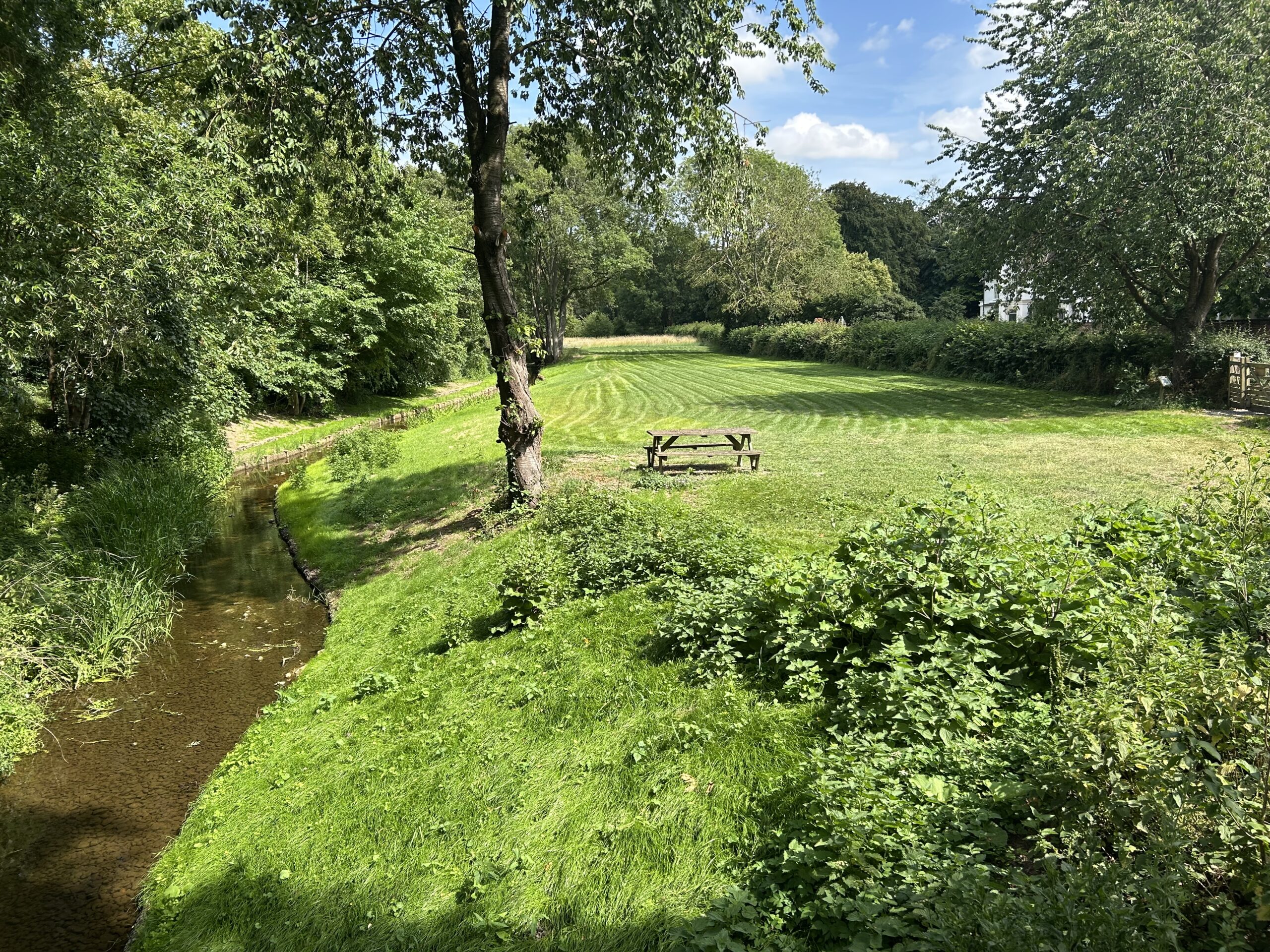
The Glebe Meadow
Starston’s Green Space
Starston’s Glebe Meadow is a 0.81 hectare (2 acre) community meadow in the heart of the village stretching east from the road bridge, bounded on the north by the Beck and Low Road and on the south by Harleston Road. It is owned by the Starston Jubilee Hall Trust [link] which manages it on behalf of the village.
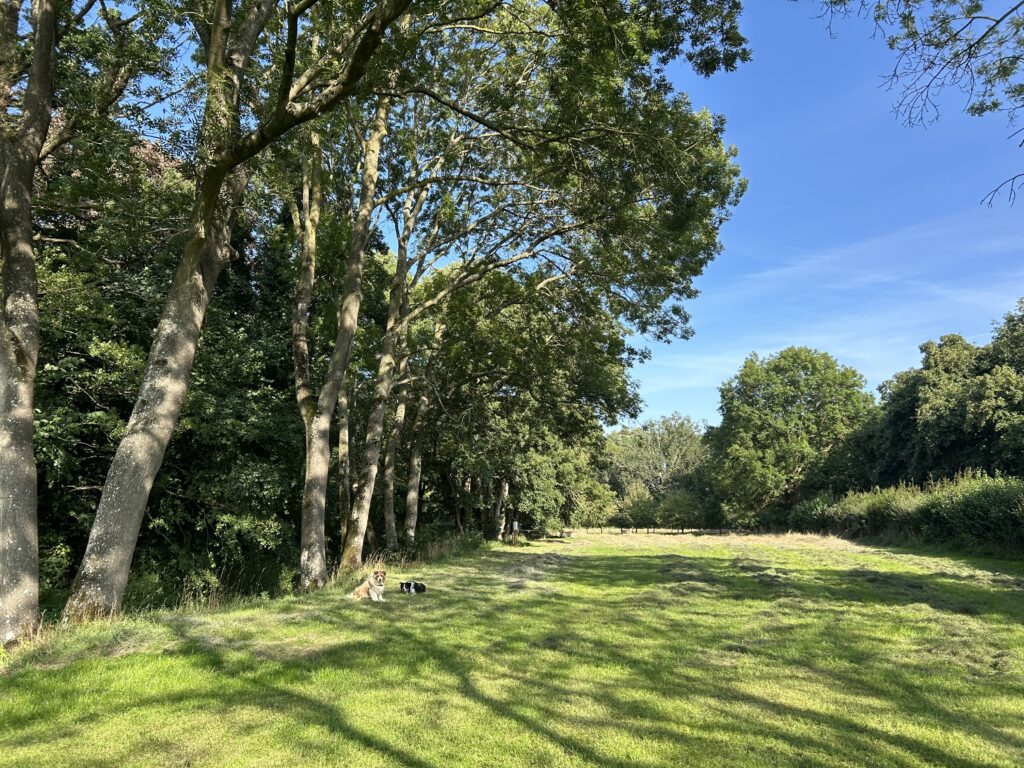
The Glebe Meadow is open to all for quiet recreation, walking, dog exercising, and village events. It results from an initiative by villagers to fund-raise the land purchase in 2012 and to manage it through volunteers for the benefit of the community.
Comprising natural meadow grassland and trees along the Beck, part of the meadow is mown and the remainder cut annually for hay. It is fenced by the hedge against the Harleston Road and a conservation orchard was planted by families. It links with the footpath network and bird and bat boxes, and also bee hives, are in place.
Starston River Habitat Enhancement Project
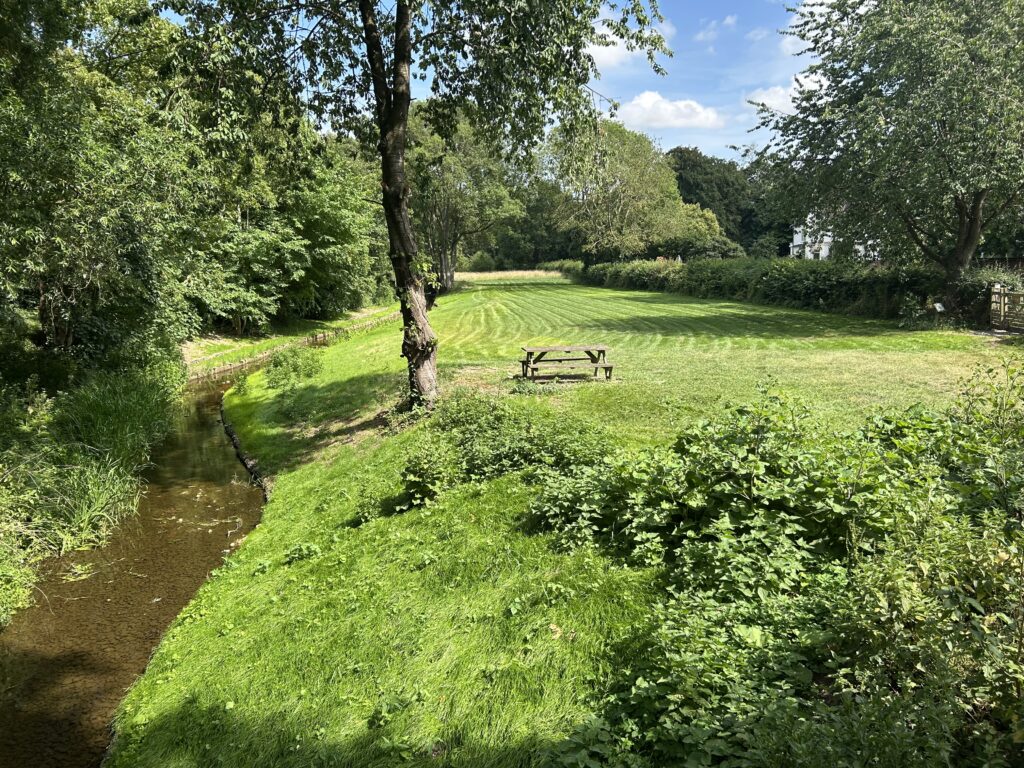
The work of a number of years has come to fruition with the completion of the Starston River Habitat Enhancement Project, one element of which was improvement to the Beck alongside the Glebe Meadow. The overall project saw the re-naturalising of the Beck to enhance ecology, particularly for fish, and to increase its value for the community. Key to this was the removal of the three weirs which had been installed in times past, including one in The Glebe Meadow, and the re-profiling of the Beck channel.
Project benefits include restoring the connectivity between upstream and downstream habitats and improving fish passage from the River Waveney, while allowing the downstream movement of sediment and gravels. Other benefits are for habitat diversity, erosion protection for Low Road and improved public accessibility to the Beck.
This project was carried out the spring of 2025 with the support of local landowners by partnership working with the Environment Agency and the Waveney, Lower Yare and Lothingland Internal Drainage Board (IDB). Funding has been provided by Defra Water Environment Improvement Fund and contributions from the IDB, Essex & Suffolk Water’s “Blue Spaces funding” and Norfolk County Council Highways.
Before

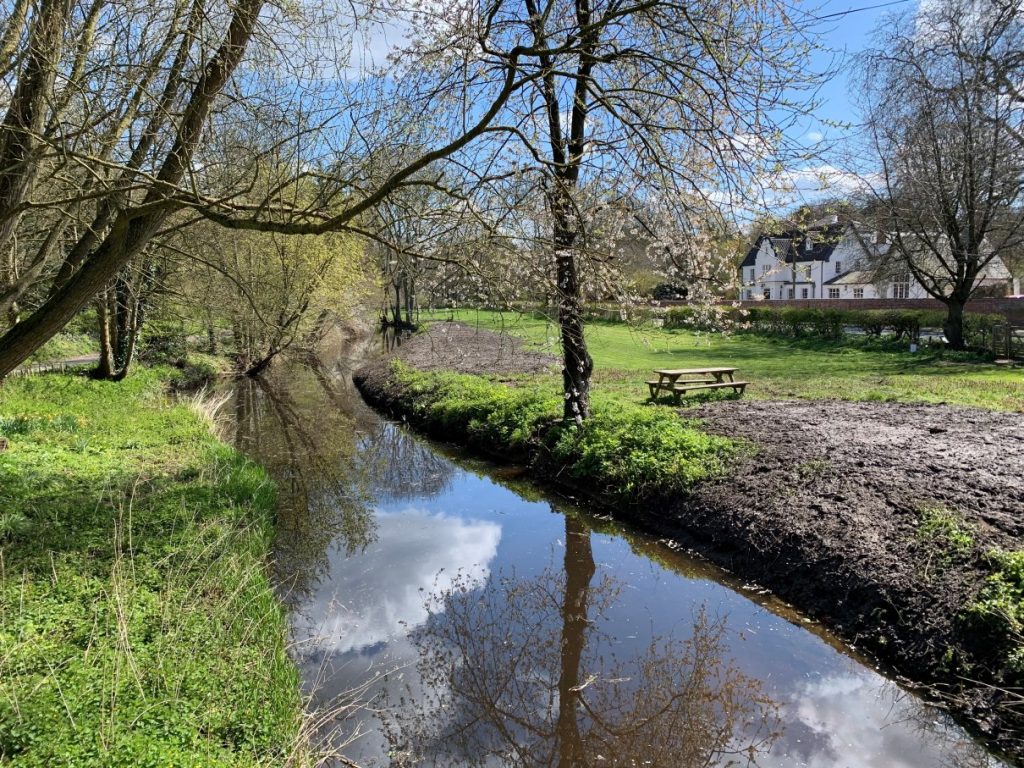
After

An apiary with a number of bee-hives has been established by volunteers and the resulting honey is sold locally to support Jubilee Hall.