
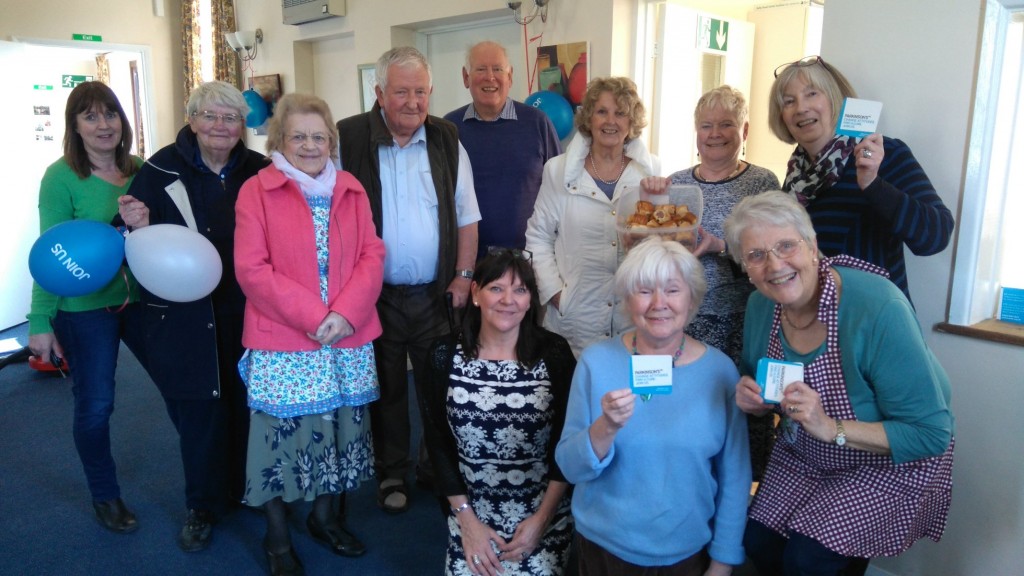
Starston is a small and vibrant rural parish in South Norfolk with a strong sense of community. It is a short distance from the market town of Harleston, and the parish extends about four miles from north to south and one and a half miles from east to west. The land is gently undulating and slopes towards the Beck and the River Waveney, which forms the boundary with Suffolk. According to the 2021 census, the population of the parish was 333, made up of a little over 140 households.
Starston appears in the Domesday Book of 1086 as ‘Sterestuna’, the name deriving perhaps from a combination of the old English word for an enclosure or farmstead, ‘Tun’, and the old Norse personal name ‘Styrr’ – thus ‘the farm belonging to Styrr’. Alternatively, it might have signified ‘an enclosure for cattle’ (steers).
Farming continues to be the principal land use within the parish, represented by the cultivation of cereal and other arable crops, several different breeds of beef and dairy cattle, and some large poultry units. Starston is also well served by woodland, including two areas of ancient woodland, and most fields are divided by hedgerows and trees, providing a valuable habitat for wildlife. There is an enjoyable network of footpaths across the parish.
The centre of the village is designated as a Conservation Area, with St. Margaret’s Church, dating from about 1300, a Grade I listed building. The village has an unusually high number of other listed buildings in relation to its size – 28 listed Grade II. Many of them have changed their use over the years: for example, the school, which closed in 1969, and the Gate Inn which closed in 1954, (although it continued as the village shop and Post Office for some years), are both private houses. More recently, the farm buildings that were originally part of the Home Farm at Starston Place were converted into a group of residential properties called The Barns, which retain their traditional brick and flint construction.
At the edge of the Conservation Area beside the Beck, although no longer operational, is a rare hollow-post wind pump, one of only two in the country, which was originally installed to provide a water supply for the livestock at Home Farm. It is Grade II listed and a scheduled monument. It features prominently on the village sign.
Between 1856 and 1866 Starston had its own railway station on the Waveney Valley line, before it was closed due to lack of usage. The line for freight and passenger through-trains continued until the 1960s; certain stretches are still apparent, and the old station (now a private house) still stands on Railway Hill.
At the heart of the village, and indeed the very hub of the community, are the Jubilee Hall and the Glebe Meadow. The Jubilee Hall is a converted cowshed formerly belonging to the Rectory. The two acre Glebe Meadow, which had once been church land and was subsequently in private ownership, was bought by the community in 2010. The Beck flows through it towards the Waveney at Homersfield, and there is an orchard of 26 different species of fruit tree planted by members of the community to mark Queen Elizabeth II’s Diamond Jubilee in 2012.
The meadow is a delightful feature, which is highly valued by the residents of Starston and further afield, who might wish to walk their dogs or just seek a place for quiet reflection. It is also a perfect venue for community events, the most notable in recent years having been parties to celebrate the Platinum Jubilee of the late Queen and the Coronation of the present King.
Always ready to report on such events, and anything else that might be of interest within the village, is its own magazine, Pigeon Post, which has been produced in Starston since 1991 and continues to be a vital source of news and information for the benefit of every household in the community.